
AI-powered HealthTech Insights
A global trend towards personalised health and preventative care is driving significant growth in direct-to-consumer HealthTech products. Symorea is a premium, direct-to-consumer skin microbiome test kit that leverages advanced DNA sequencing pipelines to deliver personalised insights into the skin microbiome.
Tone Product Design led an end-to-end Human-Centered Design process covering the physical sample collection kit design, digital experience, and Human Factors formative testing.
What we did
- Formative Studies
- Healthcare Packaging Design
- Industrial Design
- Instructions for Use
- Packaging Design
- Prototyping
- Usability Engineering
- UX / UI Design
Sector
- BioTech
- HealthTech
- Medical
- Startup

HealthTech Collection Kit Design
At-home sample collection kits face myriad usability challenges and poor compliance often leads to suboptimal sequencing once the sample arrives at the lab.
Additionally, in the direct-to-consumer realm, customer and brand experiences are critical. It is not enough to offer a product that is technically better than the competition. The product must be beautiful, brand-led, and a delight to use.
To solve the challenge we brought our hybrid expertise across medical and consumer product design to bear, inventing a novel and seamless sample collection process, marrying this with a premium visual identity rooted in organic, natural and sustainable colours and materials.
Following a Human Centered Design process, we started with in-depth research and analysis into the problem space. This built empathy within the design team whilst also underpinning the creation of detailed product and user requirement specifications.
Multiple rounds of fast-paced, creative design idea generation and prototyping followed, leveraging our extensive in-house packaging and product prototyping facilities. Multiple inventive and novel sample collection methods were generated that radically streamlined the user experience.
Tone's in-house prototyping facilities subsequently came into their own to enable the production of a batch of working units, for use in a formative usability study.
“Tone took the time to truly understand both user needs and our technical requirements, creating design directions that balanced both perfectly. We learned so much from their approach and expertise.”
Instructions for Use Design
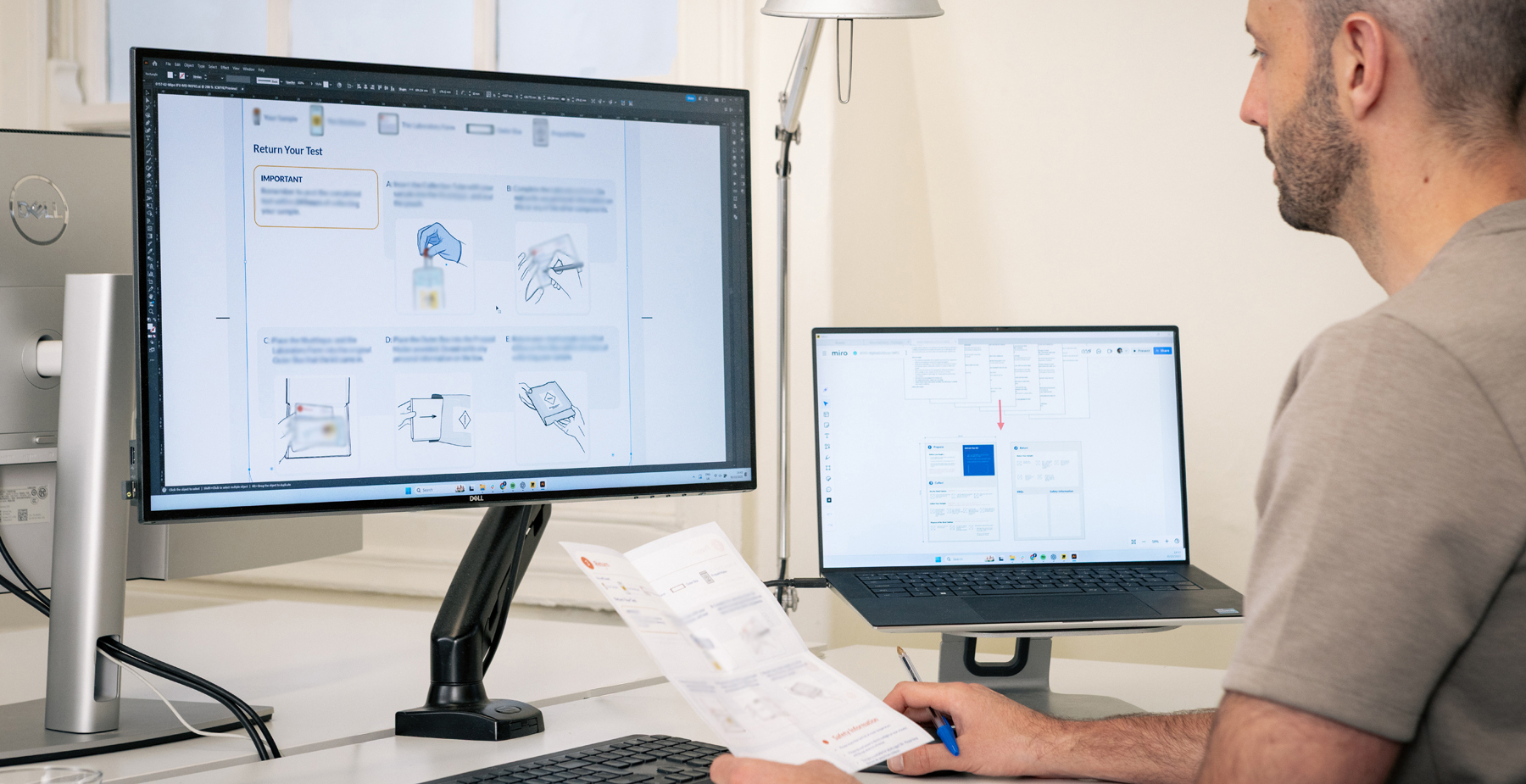
Although key usability challenges had already been mitigated through novel and inventive product design, the sample collection sequence of use remains relatively complex so clear, informative and simple Instructions for Use design was critical.
With extensive experience designing IFUs for complex products, Tone Product Design was well suited to the task and we designed a visuals-led Instructions for Use leaflet which clearly explained the steps and proved to be highly effective in a subsequent formative usability study.

Usability Engineering Formative Studies
Design and usability are two sides of the same coin when it comes to HealthTech product design. Tone's ability to run formative Human Factors studies became important to the success of the project, as tight timelines necessitated an extremely rapid turnaround of Usability Engineering insights.
Tone ran all aspects of a 12-person handling study, from recruitment and study design through to data analysis and reporting.
Keeping the design and formative testing under one roof was a significant advantage, allowing the design team to absorb all aspects of the feedback first-hand, and elevating the quality of design recommendations due to the team's deep understanding of the product, intended use and problem space.

The Impact
Our holistic design interventions across physical, digital and graphic touchpoints came together to result in a very successful usability study - showing clear evidence of a highly usable and desirable product.
The results received high praise from both our partner company and funding representatives, who identified the project as an excellent example of a well-managed, highly successful human-centered design process.